Our blog has moved!

You should be automatically redirected in 6 seconds. If not, visit
http://thepost.emory.edu/
and update your bookmarks.

Showing posts with label Abroad. Show all posts

Monday, October 18, 2010

Allie is in China ... Shanghai to Hong Kong (fourth in a series)

Read part 5 ...

Read part 3 ...

Read part 2 ...

Read part 1 ...

The flight from Seoul, South Korea to Shanghai, China was a little less than two hours long. This trip to Shanghai would be the first time that I had visited China and I wasn’t quite sure what to expect, especially since it was the only country on my Asia trip that required a visa.

I quickly cleared customs and border control with no issues at all and easily made my way to the metro stop for the airport. Signs for the Shanghai Expo reminded locals to smile at the foreigners and there were posters plastered all over the subway with the phrase “better city, better life.”

After one metro line change and 18 stops later, I was deposited at People’s Square in Shanghai, a large park in the center of the city that was a racetrack until 1949 when the People’s Republic of China was instituted and gambling and horse racing were banned. Across from my hotel was Nanjing Road, one of the most well-known shopping streets in Shanghai, selling everything from Chinese herbs and pearls to westernized malls with stores like Gucci and Prada. Just about everything you could ever want to buy could be found on Nanjing Road.

Located at the end of Nanjing Road is The Bund, one of the most famous tourist destinations in Shanghai. The Bund sits on the banks of the Huangpu River, the major water supply and thoroughfare for ships entering and leaving the port in Shanghai. This area is an interesting juxtaposition of old and new on opposite sides of the river. On one side is the Shanghai World Financial Center, one of the tallest buildings in the world, and the futuristic Pearl Tower. On the other side are historic buildings from the late 19th and early 20th century, designed by European architects with buildings that remind me of Paris or London.

Our Emory reception in Shanghai was held in the Sky Bar at the Radisson Hotel, with amazing views of the twinkling city skyline. Several parents of current Emory students attended along with a mix of alumni expats and Shanghai natives. All were eager to meet again soon and were interested to find out how they could get more students from Shanghai to come to Emory.

(See my Shanghai photos on the Emory Travel Program Facebook page!)

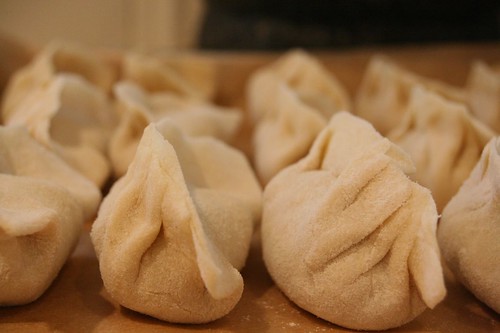
After eating my fill of Chinese dumplings for breakfast, lunch and dinner (by choice), I was back again at the airport for another quick flight, this time to visit our most active Asian chapter in Hong Kong. Somewhere between the mainland of China and the island of Hong Kong, the temperature went from comfortable but warm in Shanghai to steamy and humid in Hong Kong. It reminded me of a typical July day in Atlanta.

As a former colony of the British Empire, the English influence is still heavily present in Hong Kong. Cars drive on the opposite side of the road, and you must be careful when crossing the road to look right, left, right instead of the reverse in order to keep from getting run over in this densely populated and incredibly vertical city.

The Emory alumni in Hong Kong gather regularly for happy hours and networking, host Lets’ Go Emory parties in the late summer to send off incoming students and participate in April yield callings through the admissions office to answer question for parents or students in Hong Kong who have applied to Emory.

This fall, the chapter will also be participating in Emory Cares, our international day of Service in November. After a brief 24 hour visit to Hong Kong, I was off again. This time, headed for the last country on my trip, Singapore.

-- Allie Hill, director, international alumni relations, EAA

Tuesday, October 12, 2010

Allie is in South Korea ... heart and Seoul (third in a series)

Read part 5 ...

Read part 4 ...

Read part 2 ...

Read part 1 ...

Emory's largest percentage of international alumni live in Korea, thanks in part to Emory President Emeritus James Laney 94H, also a former ambassador to South Korea.

At my latest stop on multicity Asia trip, I was fortunate enough to meet more that 100 alumni in Seoul on Saturday evening, October 9, as we celebrated the naming of the James T. Laney Graduate School at Emory.

Seoul was a short flight from Tokyo at just under two hours. The first thing that I noticed upon landing at the airport was the thick, soupy smog that penetrated the air, almost like a dense cloud covering that lasted throughout the day. The city of Seoul was bustling with activity and preparation for the G20 Summit in November. I witnessed the planning first hand on Friday morning at my hotel, the first Western-style hotel built in Seoul and the host to many visiting dignitaries and foreign officials during the upcoming meeting of the nations. Check out my YouTube video about this.

While in the lobby on Friday morning, I noticed a lot of activity by officials with clipboards. A short time later, the lobby filled with smoke and the fire alarms sounded. The hotel was evacuated.

When I exited the hotel, it was surrounded by four fire trucks, multiple ambulances, and several military emergency response vehicles with weapons poised. I established a vantage spot across the street to watch the activities unfold--luckily it was just a drill. Sirens blared, pretend victims were rescued from the roof of the hotel while fake explosives were detonated, and smoke continued to fill the air. Seoul definitely takes the upcoming summit seriously and is prepared!

I met several of our local Seoul alumni chapter leaders for a traditional Korean dinner that evening. The meal was 10 courses long with my favorite dish being the jellyfish salad.

I am sure that you are wondering how jellyfish tastes. Honestly, it doesn't taste like much, is hard to eat with chopsticks and could easily be mistaken for pasta--except it is clear! Other courses included kimchi, tempura style shrimp, and a delicious fruit-punch-type drink for dessert.

My visit to South Korea may have been short, but was definitely eventful and I leave with the knowledge that our alumni in South Korea are full of pride and dedication to their alma mater, even halfway around the world!

-- Allie Hill, director, international alumni relations, EAA

Thursday, October 7, 2010

Allie is in Tokyo ... planes, trains, and automobiles (second in a series)

Read part 5 ...

Read part 4 ...

Read part 3 ...

Read part 1 ...

After a 14-hour plane ride from Atlanta, a train ride from Narita International Airport into the city and a 13-hour time difference, I’ve finally arrived in Tokyo!

I thought I would share some of my early impressions of visiting Japan. First of all, the people are incredibly friendly. Yes, there is definitely a language barrier, but a smile and a short bow of the head goes a long way!

So far, there hasn’t been anything that I haven’t been able to communicate, even through I don't know a single word of Japanese. I’ve been able to easily order in restaurants (by pointing), navigate the city, and even track down wrapping paper and tape for some gifts.

To me, Tokyo is its most beautiful at night, when the city is lit up with thousands of signs, flashing lights, and illuminated office buildings, with employees hard are work often to the late evening. I am staying in Shibuya, the Tokyo Times Square area, which is centrally located so there are plenty of lights and signs all around.

Navigating my way from the airport to my hotel and around the city has been pretty easy – most signs that a tourist would need to read are written in both Japanese and English. There are comforts of home right outside of my hotel – a Krispy Kreme and a Starbucks! Both are extremely popular and crowded at all hours of the day and evening.

The Krispy Kreme is even two stories tall with booths and tables for enjoying the sugary goodness. I peaked in the window to see if I could notice any differences from our Krispy Kremes at home and couldn’t spot anything majorly different. If the bags and bags of donuts that I saw heading out the door are any indication, they must taste the same as they do at home.

One obvious difference that I have noticed is the smaller size and portions of food then we are used to at home. This was especially apparent at the Starbucks, where the average-size drink is equivalent to a kid's-meal-sized drink back in the US.

One of my other favorite things to do in a new city is to visit a grocery store. You can learn a lot about a location by just visiting something as simple as where they do their shopping. The most striking difference happened to be the price of fruits and vegetables. Bananas were sold individually and were the equivalent of $2 each. Grapes were selling for $15 a bunch and cantaloupes were more than $20 each.

Yesterday evening, I hosted the first of our Asia receptions. We had a great turnout of 15 alumni, parents, and spouses. The group was very gracious and appreciated the opportunity to get to know other Emory alumni in Tokyo and to hear about what was happening back on campus.

All agreed that they wanted to continue to meet on a more regular occasion. After only two days in Japan, I am about to board a plane for South Korea to prepare for our large alumni event on October 9. Thank you Japan and the Emory alumni in Tokyo for a short but sweet visit!

-- Allie Hill, director, international alumni relations, EAA

Wednesday, September 29, 2010

The last leg home (sixth ... and final ... in a series)


As I sit down to write this final installment about Pacific Partnership 2010, our steam plant is warming up and we will be departing Pearl Harbor within the hour. The Arizona Memorial rests only a few hundred yards across the channel, and the clear blue waters of the eastern Pacific are now all that stands between me and being home (a journey that will be about a week and three time zones).

Our final mission stop in Timor-Leste was again resoundingly successful, and the country has made remarkable strides forward since I last visited in 2008. There is a large UN presence there, and I was very happy to see the tremendous progress in infrastructure that had occurred in just two years. The streets were safe, the people were taking pride in their communities, and small businesses were thriving. It was a great pleasure to provide medical, dental, and surgical care to the people of Timor-Leste.

As they continue to progress, it is a testament to the success of these humanitarian assistance missions that they still throng to see us, but they require fewer and fewer of us. In addition to our land-based and shipboard work, we spent a great deal of time working with their national hospital system to review budgets, identify critical needs for the future, and map out a regional referral system with the assistance of our Australian colleagues.

Although the country has come a long way, there were still long lines to see the American and Australian doctors and we actually saw more patients this trip than in 2008. It was also nice to go ashore and not have to be escorted around by New Zealanders with large guns as we did in 2008.

We were actually allowed off the ship for some free time this year. There are some great spots for snorkeling and diving on unspoiled reefs. The sea life was abundant and the water was warm and clear.

There were a number of up-and-coming restaurants serving a variety of cuisine. I had the opportunity to attend the Operation Smile end-of-mission dinner with a buffet prepared by an Australian expatriate. It was the most unique buffet line that I have ever been through – everything in the line was meat. There were no side dishes and no vegetables, just sterno-heated foil trays full of meat. It was all delicious and the fare included chicken, lamb, beef, and the owner’s personal recipe for sausage (not really sure I want to know more, but it was good).

Our time in Timor-Leste passed quickly and before we knew it, we were heading for home. We stopped for four days in Guam to let 400 people get off the ship and return to their families and regular jobs. The remainder of us continued to ride Mercy eastward.

The trip from Guam to Hawaii seemed to take an eternity. After 10 days of transit, we saw land again, and made our way to the pier in Pearl Harbor. We finally set foot on U.S. soil after nearly five months, and it was good to be back.

It was a gentle transition back to America, because everywhere I looked, there seemed to be Japanese tourists running around. Our 36 hours in Hawaii were just enough time to get off the ship and enjoy a couple of nice dinners before starting the final leg of the journey home.

As I conclude my journals for this adventure, I wanted to share a few numbers with everyone:

101,662 – number of patients seen during Pacific Partnership 2010
16,000 – approximate number of nautical miles traveled since May 1
14,387 – number of glasses given out to patients
9,254 – number of emails received since May 1
4,723 – number of emails deleted without reading
3,456 – number of emails sent
2,602 – number of animals treated by the vets
817 – number of surgeries performed on Mercy this mission
144 – number of days deployed
60 – number of community service events in host nations
18 – number of major engineering projects completed by Seabees
6 – number of articles of clothing ruined in the ship’s laundry
4 – number of helicopter rides to mission sites
1 – number of boats built and raced in the Darwin Beercan Regatta

**Number of Diet Cokes consumed – too numerous to count

Life experiences, meeting new people, and sharing the ups-and-downs of deployment with good friends – priceless

After nearly 13 months of planning and participating in PP10, this mission is just about over and I’ll go back to my regular job at Naval Medical Center San Diego at then end of September. Thanks to everyone who wrote this summer. I truly appreciated hearing from each and every one of you.

These missions bring together many people from many different backgrounds. I have made many new friends and created lifelong bonds among those who participated in PP10. As the director for surgical services, I learned a lot about leadership, about managing 300 people, and about myself. I’m very proud of the effort that my team put forth, and as we start the last leg home, I’m glad to have left the world a little bit better off than when we started in May.

-- CDR Trent Douglas 95M, director, surgical services, USNS Mercy

Monday, September 20, 2010

Allie's going to Asia (first in a series)

Read part 5 ...

Read part 4 ...

Read part 3 ...

Read part 2 ...

No matter where in the world you live, Emory is always within your reach.

The Emory Alumni Association (EAA) instills this message in graduating students each May before they become our newest alumni, leaving campus for wherever the future may take them.

Many of Emory's 110,000 alumni end up in Atlanta, Washington, or New York but approximately 2,800 move outside of the United States after graduation, either returning to their home country or perhaps on a temporary or even permanent assignment for work.

Given the geographic distance, time zones, and cultural differences, you may wonder how Emory manages to stays relevant in the lives of its international alumni. That is where I come in.

My name is Allie Hill and my role here at the EAA is director of international alumni relations. I work with our 18 international alumni chapters around the world, helping alumni stay connected to Emory through social and educational programming in cities from London to Hong Kong.

As a former expat and lifelong travel fanatic, I’ve actually managed to completely fill my passport two times now. I feel incredibly lucky to be able to combine my love of all things international with the work that I do for Emory.

On October 4, I will be leaving Atlanta for a two-week, whirlwind journey to five countries to host Emory receptions in our target cities and meet with potential chapter leaders. My mission in Asia will be to develop our alumni chapters in Tokyo, Seoul, Shanghai, Beijing and Singapore.

This will actually be my second trip to Asia. My first was in 2007 to Japan and South Korea as a host with the Emory Travel Program to see the cherry blossoms in the springtime. The photo above was taken during that journey. I thoroughly enjoyed that trip and considered it to be a once in a lifetime opportunity. Imagine my surprise and delight to find out that I would be returning to Asia again next month.

Follow along here on EAAvesdropping for frequent highlights from my travels, photos from my journey and updates on how I manage to survive without my daily large sweet tea from Chick-fil-A.

If you went to Emory and are living in one of the cities I mentioned above, or are the parent of an Emory student, I’d love to meet you on my trip. Email me at allie.hill@emory.edu for additional reception information. I hope to see you in Asia!

-- Allie Hill, director, international alumni relations, EAA

Monday, August 23, 2010

Alaskan adventure

I am Paul McLarty 63C 66L, Emory Alumni Board president, and I recently returned from a trip to Alaska and the Yukon with Emory classmate and fraternity brother, Jim Alexander 63C.

There were many highlights on this trip, including visits to Denali and Wrangell-St. Elias National Parks, the Chilkoot Trail, gold mining ghost towns, breathtaking mountain passes, Top of the World Highway, viewing wildlife (bears, moose, caribou, eagles, dall sheep), glaciers and salmon fishing. We covered over 3200 miles in two and a half weeks.

In preparation for this trip, we tried to find Emory alumni who live in the areas on our itinerary. We made contact with Jodi Bailey 91C. This turned out to be one of the most interesting visits on our trip. Jodi grew up on Martha’s Vineyard, attended Emory, earning her degree in Drama and Anthropology in 1991. The summer after her freshman year at Emory she went to Alaska to study Athabascan storytelling in Fairbanks. She fell in love with Alaska and returned there immediately after her graduation in 1991. Someone talked her into taking a sled dog and that was the beginning of her passion for mushing.

Today, Jodi and her partner, Dan Kaduce, operate Dew Claw Kennel. Jodi is a faculty member of the University of Alaska in rural and community development and Dan does seasonal work with TJ’s Land Clearing.

The dogs, however, are central to their lives. As Jodi says, “I think I mostly got started as the natural progression of my love of the Alaskan lifestyle and the outdoors. I began mushing as a fun way to get out and explore in winter. But as our kennel grew and we gained experience the next step was trying races and events. I enjoy working hard with the dogs all season and then having the opportunity to participate in events with other teams. It adds fun and excitement. Plus, it gives me a chance to travel by dog team in parts of the state and places I would not get to see otherwise.

Dan had a background in competitive sports, and was the first to race seriously. After a while of being involved in every aspect of training and preparation it was natural that I would also want to take a turn at running the race team in events.

Mushing is a lifestyle – not a hobby. Racing has really helped me to improve as a musher, and given me a great sense of focus in life. When I race, those are some of my most treasured times. You are out there with your team totally focused on the dogs and the trail ahead of you. The rest of the world melts away and you don’t have a job or email or bills. It is just you and the dog and the trail. I feel very lucky to be able to get out in the Alaska back-country and feel that way.

I know the Iditarod will be the biggest challenge the dogs and I will face together, and I am really looking forward to it.”

Jodi has registered to race in the Iditarod in March 2011.

In addition to the Dew Claw Kennel website, you should also check out http://iditarodblogs.com/news/files/2010/05/2010-Awards-Photos.pdf. Dan was the Iditarod Rookie of the Year in 2010 and there is an article about Jodi having registered to race in 2011.

If you are going to be in the Chatanika, Alaska area (about 35 miles from Fairbanks) you may want to arrange a visit to Dew Claw Kennel. At the very least you should have lunch at Chatanika Lodge and learn about outhouse racing. I am not kidding!

--Paul McLarty 63C 66L, president, Emory Alumni Board

Wednesday, August 18, 2010

Our special project ... with beer cans (fifth in a series)

Read part 4 ...

Read part 3 ...

Read part 2 ...

Read part 1 ...

So I promised you a story about a "special project" in the previous blog post. Here it is!

Coming out of Singapore, the Orthopaedic Surgeon and my good friend, Matt Provencher researched fun things to do in Darwin, Australia for our much-needed four days off. One of the first things that popped up was the "36th Annual Darwin Beercan Regatta." The idea is to build a boat out of soda or beer cans and race it. Although there is no beer on American ships, there were nearly 1,000 people onboard at that point and there were lots of soda cans around.

First question - how do you secretly build a sizeable boat without knowledge of it reaching the people who could make you stop?

Second question - how many cans are we actually talking about?

Third question - once you build it, how do you get it off the ship and through the very strict Australian customs and agricultural inspection station?

Before proceeding further, Matt contacted the event coordinators for more details. The event chairman, Des Gellert, was thrilled to have an international competitor, the first American entry ever. He emailed us the entry forms and rules and would end up playing a larger role later...

After reviewing the rules and having a brainstorming session, we knew we needed organization, materials, and dedicated and discreet people. Enter Kevin and Ruth. Kevin is our malcontented ENT surgeon and a fellow veteran of the 2008 mission--I knew he could be trusted. Ruth is one of our civilian nurse volunteers working in the OR and has a background of rowing crew in college. Both were immediately recruited and sworn to secrecy. We had an executive committee (me, Matt, and Kevin), a design committee (Shaun and Dave), a fledgling building committee (Ruth), and an entire ship at our disposal.

We launched the "special project" with a massive soda drinking campaign and set aside special containers in which to collect the cans. Shaun figured that we would need about 1400 cans to float a 4-person boat. Our team decided that a catamaran design would be the most stable platform.

The next several days en route to Indonesia were spent scouring the ship for materials. We figured out that we needed to bring additional people into the project if we were going to succeed. LTJG Gomez, the Seabee who controlled all the saws, drills, and other fun stuff, donated tools. He was also young, light, and strong, so he ended up on the boat as a paddler with Ruth, as did Shaun. We also had to enlist one of the civilian mariners who works as permanent ship's crew - Elvis (yes, really). Elvis got us some aluminum railing which aided the final structural strength of the craft.

The next dilemma was how to put all the cans together. We debated everything from duct tape to silicone caulking but finally decided on epoxy at Shaun's insistence (good call, Shaun). As we sat in the middle of the Moluccas islands, we asked - "Where in the hell are we going to get some epoxy?" LTJG Gomez suggested that we go to the local hardware store. Gabe (LTJG Gomez) frequented the local version of ACE Hardware almost daily to pick up supplies for his engineering projects ashore. We collected Rupiah (9,000 rupiah to the dollar) and sent Matt to the hardware store.

Our boss, Commodore Franchetti, was baffled when she rode back on the boat with Matt who was carrying sheets of ¼' plywood, PVC pipe, and several epoxy cans. She admitted that she was so flummoxed, that she thought it best not to ask questions.

Next step - Where do you secretly build an 8 foot by 7 foot catamaran on a ship with nearly 1000 people working day and night? Enter Machinist Mate First Class Adrian Pena. MM1 Pena is another trusted veteran from 2008 who let us build the boat in the Oxygen generating plant. This was perfect since it was one level removed from the cranes on the flight deck and was not subject to routine inspection. The only caveat was that we’d have to move if they needed to light off the plant to generate some oxygen for the anesthesia machines (more on this later).

We were excited to have a project that diverted us from the doldrums of mid-deployment. The can collection started very slowly, so we had to make personal rounds every evening throughout the ship to collect. Based on international maritime laws, we have to sort our trash, so several cans were pre-sorted for us by virtue of being in the metal collection bins! People found it very odd that two Commanders and a Navy Captain rummaged through the trash every evening.

The cans poured in and were sorted by color and type (Mountain Dew was the most common, followed by Diet Coke). Shaun mixed epoxy and sealed the cans together. Ruth, Tess, and Erica spent hours in the stuffy oxygen generating plant roughening the edges of the cans with files to allow a tighter molecular bond with the epoxy. We'd collect cans, file down cans, or go to administration spaces and make sure no one knew about our secret project.

Over the course of several weeks, we ran into various dilemmas. First, our oxygen reserves became low and the Chief Engineer indicated to MM1 Pena that he needed to fire up the oxygen generating plant. Second, epoxy levels were low--and we were about to move to a different island with an unknown ability to resupply. Third, Des Gellert from the Darwin Beercan Regatta, was so excited about our international entry that he advertised our boat on the local radio.

The executive committee sprang into action. We promoted Shaun and Ruth to the executive level based on sound decision making, proven discretion, and the ability to get the job done.

Step 1 - Move the boat. Fortunately, we only had about 400 cans glued together in rows of 10. We put the frames together with industrial sized zip-ties courtesy of Elvis. Just to be sure, we poured epoxy over the whole thing. MM1 Pena relocated us to the Medical Gas Storage Locker on the first deck. It had wide double-door access and air-conditioning. Everyone was relieved to see the new work space. That night, we spirited the rows of cans and the plastic framework out of the O2N2 plant and relocated everything one floor down.

Step 2 - Get more epoxy. Since Matt's interaction with the local orthopedic surgeon was successful, it was time for a follow up with our host nation colleague. I got Matt and one of our trusted CRNA's on a morning boat to “teach." A few hundred thousand Rupiah later and we had enough epoxy to finish.

Step 3 - Damage control. With Des airing radio ads about our imminent arrival in Darwin and causing interest in the arrival of the MERCY, I let the boss know about the project. I put a very positive spin (BS'd my butt off) on the opportunity for us to highlight Pacific Partnership through entering the race.The Commodore fell in love with the project! We received official permission to enter the race and build a boat aboard the ship.

We were almost ready to leave Indonesia for Darwin. The previously mentioned visit by the Indonesian President was a blessing in disguise. The security lockdown on the city of Ambon was impressive and for two days we did not leave the ship and surgery finished for the mission site. Our team took action.

Rows of ten cans became rows of twenty. Used sealed water bottles with a laminate of thin plywood provided buoyancy. Matt drilled and put screws in things faster than we could lay cans and tighten zip ties. We used duct tape to hold the cans in place while they dried. We finished construction of the individual pontoons the evening prior to arrival in Darwin. The final step was relocating to the helicopter hangar for final assembly. Naval aviators put a soda can boat right next to their $15 million dollar Seahawk helicopter (thanks Cooter and Bacon!).

Last step - Get the boat off the ship and to the race. Des gave us a flatbed truck to haul the craft over to Mindil Beach for the event. Elvis rigged a series of ropes to sling the boat for the crane ride to the customs and agricultural inspector. I gave her the paperwork for bringing the boat into Australia and she mentioned that she had heard about this on the radio--she was going to have to let it in.

When Elvis went to crane the boat over the side, the executive committee let out a collective cheer as it lowered to the waiting bed of Des' truck. MERCY crewmembers finally got a glimpse of what had been only a shadowy urban myth.

Race Day - The "USNS NO MERCY" sat proudly atop two sawhorses from the high-water mark. It was the most photographed vessel of the day, largely due to the beautifully painted sail that young HM3 Jones designed and decorated. The other big hit was the giant "NO MERCY" sign that MM1 Pena engraved.

When race time finally arrived, our paddling team of Shaun, Gabe, Ruth, and Nicole climbed aboard. We had about 300 people from the ship watching and cheering. The Commodore was there to help launch the boat as well. Our crew was strong and the boat well built. We placed 5th out of 30 entries and sustained little to no structural damage. Apparently, Indonesian epoxy is some really strong stuff.

NO MERCY won best soda can boat and best international entry (there were 2 Japanese entries and one from Ireland). It was a great way to spend a day and it was the culmination of a lot of hard work. It was also a bittersweet ending to our time in Australia and the fact that we had to say goodbye to many of our new friends and colleagues.

Interestingly, the story of NO MERCY is not over. The local Lion's club wanted to keep it and we were all too happy to oblige since the Commodore made it very clear that she didn't want it coming back on the ship. It is currently on Ebay Australia and being auctioned for charity. The auction will start on the 19th in the States. Click here and search "beercan boats."

The boat project has been among the most enjoyable that I have ever had while deployed. New friendships were made, existing friendships were cemented, and lifelong connections were established. I learned more about organization and leadership with the executive committee than I have being the director for surgical services during the mission.

The NO MERCY team has scattered in to the wind and either already gone home or are preparing to do so in Guam. The summer is definitely coming to an end and I was glad to have just one shining day in the sun with good friends. I'm ready to go home.

--CDR Trent Douglas 95M, director, surgical services, USNS Mercy

Monday, August 16, 2010

Stinky fruit ... but a good time (fourth in a series)

Read part 5 ...

Read part 3 ...

Read part 2 ...

Read part 1 ...

I have some wonderful, new tales from the high seas aboard the USNS MERCY. I promise it's worth it.

Our four-day stop in Singapore was a much-needed respite from the daily grind of shipboard life. After finishing two grueling mission sites in Vietnam and Cambodia, a soft hotel bed, no reveille in the morning, and the opportunity to get some real food were all welcome departures from our routine.

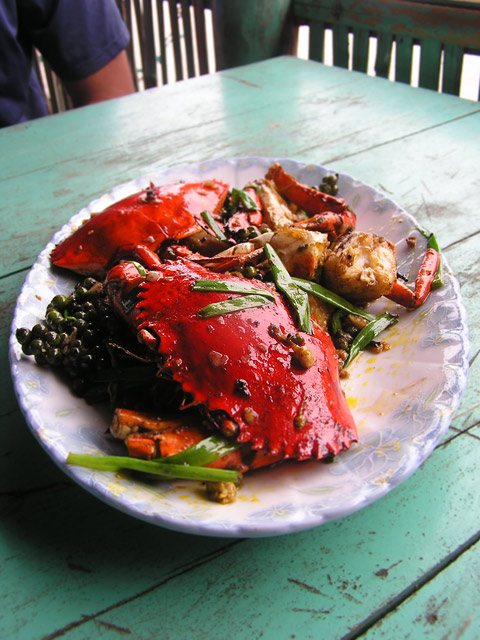
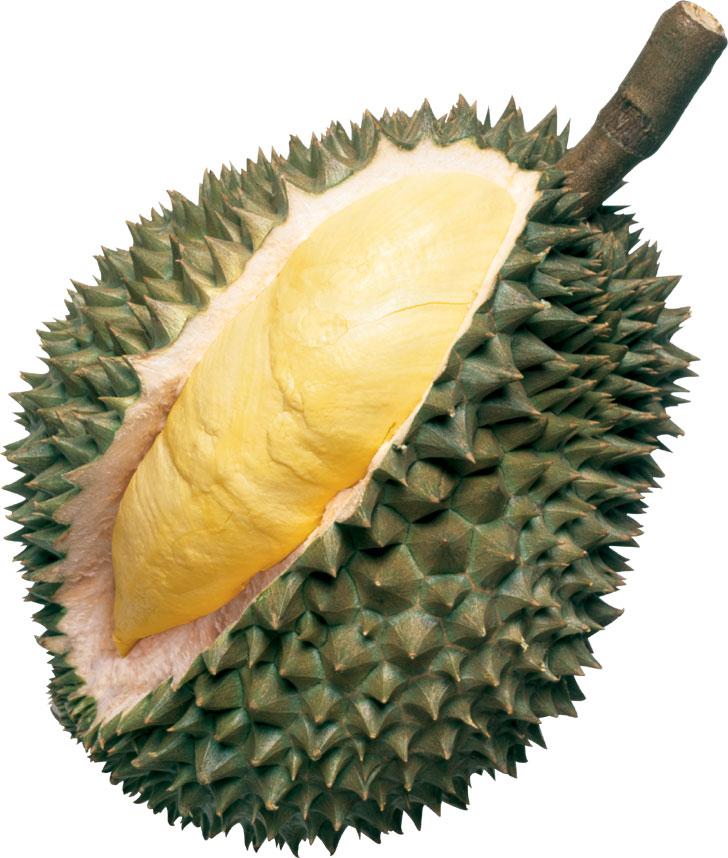
The highlight of the trip was meeting up with two of the Singaporean ophthalmologists who had worked with us in Vietnam. They treated a small group of us to dinner at one of their favorite local restaurants. We enjoyed the Singaporean specials of peppered crab and chili poached fish-- both dishes were spicy enough that I was sweating from every pore on my body. Always willing to try new foods, I made the grave mistake of agreeing to eat durian for dessert.

Because of the pungent odor, durian is not allowed in taxis or subways. Our Singaporean friends cracked them open and dug right in, literally. After watching the proper technique for scooping the squishy yellow pulp from its bed, I lifted a section out and stuffed it in my mouth - big mistake. The texture and flavor combined to overload my taste buds and sent me into a tailspin of gagging and retching. The Singapore guys were on the floor laughing out loud.

Singapore is a bustling city and our time there passed all too quickly. Before I knew it, we were all back on the ship and heading for Indonesia.

Heading south from Singapore, we crossed the equator and the ship's usual routine was interrupted as we participated in the time-honored naval tradition of the "Crossing the Line" ceremony. This involves the uninitiated "pollywogs" (see what this is in the previous link) having to prove their seaworthiness to the "trusted shellbacks" through a series of physical and mental challenges. Having gone through as a pollywog in 2008, I can definitely say it is better to participate as a trusty shellback. My directorate did win the Pollywog Talent Show with an inspiring cover of the Village People's "In the Navy."

As a senior shellback, my role this year was as the Royal Surgeon and personal advisor to Neptunus Rex. Essentially, I got to sit in a lawn chair right up front and watch the festivities directly in front of me. The good-natured fun concluded with a "steel beach" picnic on the flight deck to welcome over 700 new shellbacks to the fold. It was about at this juncture that our “special project” for Darwin, Australia was hatched (more on this later).

Our arrival in Indonesia was much heralded as the current model of these Humanitarian Assistance/Disaster Relief missions was originally borne out of the MERCY's disaster relief efforts after the tsunamis of 2005. This year marked the first time that MERCY had returned to Indonesia since 2006 and we received an overwhelmingly warm and generous reception. Our area of operation was the central Moluccas islands, which are famous for the spice trade. At any of the open-air markets one could find fresh pepper, nutmeg, or cloves. The local cuisine was richly invested with these spices and the dishes found in the local restaurants were a treat to the palate.

Indonesia is largely a dry country, and a good bottle of wine with which to enjoy a meal was not easily found. We visited three islands during our month in Indonesia, the corresponding cities were - Tobelo, Jailolo, and Ambon. Each had its own unique beauty and there was an active volcano spewing ash into the sky as we lay at anchor off Jailolo. I immediately knew this would be a great stop.

In 2008, I had met Indonesian Colonel Arie Zakaria, a well-trained orthopedic surgeon who spent a month on MERCY with us. Colonel Zakaria was back again this year, and this time with his own Indonesia hospital-ship - a converted Korean amphibious assault ship complete with hyperbaric chamber and landing craft. The inside of the ship looked remarkably similar to MERCY even to the point of being painted the same horrible 1950s lime green color down the passageways. Arie is a bit of a mover and shaker in the world of Indonesian politics and he arranged for five of us to come over and visit his ship on the day that the president of Indonesia was going to be there.

The MERCY's stop in Ambon was part of a large disaster relief training mission and also an opportunity for their leader to present an award to us for the ships role in the tsunami relief efforts of 2005. In any event, I found myself face-to-face with the Indonesian president in the operating room lounge aboard the Indonesian Hospital ship. He was extremely gracious and invited all of us to take photos with him. What a great time!

Tune in tomorrow for an enthralling story on the “special project” I mentioned earlier. You won’t regret it!

--CDR Trent Douglas 95M, director, surgical services, USNS Mercy

Tuesday, July 6, 2010

Cambodian fortnight (third in a series)

Read part 5 ...

Read part 4 ...

Read part 2 ...

Read part 1 ...

As the skyline of Singapore fades into the hazy gray of the equatorial summer and Malaysia passes by to the port (left) and Indonesia to the starboard (right), I am again writing from USNS Mercy (the ship at the top of the photo) to update you on the progress of Pacific Partnership 2010. I will apologize at the outset—it’s a long one, but worth it.

Another few weeks have gone by, and at the time of my last message we were just getting ready to pull into Sihanoukville, Cambodia. Right on schedule, the anchor was let go and we sprung into action. Our 60-person surgical screening team tromped down the three decks of noisy steel ramps and took a fairly smooth and mercifully dry boat ride to the pier.

During the 20-minute trip we passed an island with a solitary Buddhist temple and then looked over the bow toward the lush green landscape giving ample credence that it was wet season in Cambodia. I am still amazed that it is dry season in Vietnam and just around the peninsula in the Gulf of Thailand; it is full-blown rainy season.

After passing our Partner Nation vessel, the Japanese Self Defense Force ship Kunasaki (above, center), we caught our first glance of the breasting dock through which we would make our way to shore. It is a sight that I will not soon forget.

The fact that this rusty contraption stayed afloat was a testament to applied physics, some good old-fashioned twine and a few empty 55-gallon drums. Getting off the band-aid boat and onto the flat portion of the dock was easy enough—it was the next series of maneuvers that bear mentioning.

First you have to climb a very narrow and very vertical ladder to reach a small platform that was still about three feet below the edge of the pier due to the low tide. Hanging on both sides and overhead was a tangled mess of wires leading to a few naked low-wattage bulbs. The lower loops of wire bobbed up and down in the water as small waves lapped at the side of the barnacle-covered concrete pilings. The entire inner core was covered with some ill-defined layer of marine slime. By the time I negotiated this maze without being electrocuted, I dusted off my rust-covered hands and was pretty sure that I needed both a tetanus booster and a strong dose of antibiotics.

Being the first group ashore at each new mission site has its challenges. Asking myself, “What could possibly go wrong?” I walked up to the pier boss and made sure that our group had transportation to the screening site. He pointed down the length of the pier, made a series of contorted hand gestures and said something about Cambodian border patrol.

The 60 of us then gathered our gear and trudged through the early morning humidity with a glowing sheen of sweat across our brows. As we dropped our bags at the container boxes that held our precious bottled water (also sitting in the morning heat), we were greeted by RADM Nora Tyson, the Navy one-star who is in charge of these parts.

The first pleasant surprise of the day came when I saw that we had large air-conditioned tourist buses rather than open-window, painted-over school buses that probably drove Beaver and Wally to school in the 1950s. (Score one for the Advance Party guys).

Comfortably seated in the buses, we proceeded with a police escort to Sihanoukville General Hospital. It did not give me great comfort, however, to be sitting right in front of the preventive medicine guy who kept saying "Neat, I caught another one, and look, it's full of blood." He of course was referring to the mosquitoes that had joined us for the trip to the hospital. Head in hands, I cracked open my first bottle of pre-heated water for the day.

Fifteen minutes, a few ignored red lights, and dozens of narrowly avoided mopeds later, the buses turned off the relatively well-paved road and onto a winding and deeply rutted dirt path that led to a faded yellow, one-story building—Sihanoukville General Hospital. About 200 patients already were waiting in line and were very glad to see us drive up.

We jumped off the buses, covered ourselves with bug spray and set about our work. About mid-morning, my big boss, RADM Christine Bruzek-Kohler paid a visit. Fortunately, everything was running smoothly and she leapt at my offer to join the action. With full credit due, she rolled up her sleeves and worked at the anesthesia screening table for about two hours before her aide insisted that she leave to attend a lunch function. She was having a good time and was reluctant to depart.

I spoke with her later that evening back on the ship and she conveyed great appreciation for the opportunity to take part in the mission. All told, we saw 247 patients that day and scheduled 132 for surgery. As we were packing up in the late afternoon, we were treated to another site that you don't get to see back in the states—a couple of very scrawny cows wandering right through the middle of our screening site.

Monkeys and cows are all over the place here. We treated the veterinarians for two monkey bites and one laceration that was delivered by the horns of a water buffalo who opposed getting vaccinated. Feral monkeys are nasty little creatures and bear close watching.

The day ended favorably; we got back to the ship without difficulty and we had a very productive visit. We were joined by our Operation Smile colleagues for five of the 12 days and had a great time. They brought a multinational team with individuals from nine different countries. The common language was English (or some variation thereof). They were gracious partners and treated us to an end-of-mission dinner at a nice resort hotel—The Sokha.
The local seafood was delicious and for dessert we had fresh dragonfruit and pineapple. At the end of our two weeks in Cambodia, we had performed 272 surgeries and were all thoroughly exhausted.

Cambodia is a very interesting place, filled with interesting people, and I had the good fortune of making the acquaintance of one Mr. Lim. I was seated next to him at a luncheon to honor CAPT Sasaki who is the commanding officer of the aforementioned Kunasaki. Mr. Lim is a master brewer who studied for years at the Guinness brewery. He now runs Cambrew and makes the very tasty Angkor beer.

A few toasts to CAPT Sasaki later, and I was invited to join Mr. Lim and a few others from the ship at the Cambrew tasting room. In my wildest dreams, I could never imagine myself sitting in a lavishly decorated tasting room in Cambodia, sipping a wide variety of beers with an accomplished Malaysian brewmaster. The Angkor lager was exceptional, but the stout came up just short of Guinness, something about the water, Mr. Lim explained.

On a more somber note, on the second to last day, we were involved in the initial treatment and medical evacuation of a U.S. Embassy employee who was severely injured in a car crash; the Australian ER nurse and the Army medic who were the first responders are directly responsible for her being alive today.

The helicopter pilots made a heroic effort to find her in the midst of a downpour with only a few sketchy landmarks for navigation and an underpowered flashlight to guide them down to the makeshift landing zone. A few blown over fruit vending stands were a small price to pay to save a life. Within 30 minutes of picking up our patient, she was aboard MERCY.

We don't have a neurosurgeon aboard during the humanitarian assistance missions, so the duties of performing a craniotomy fell to the plastic surgeons. Alan Lim (no relation to my brewer friend) is another Navy plastic surgeon aboard, with advanced craniofacial training. As Alan was getting the OR set up, I was dialing my neurosurgeon buddy back in San Diego.

To his credit, he didn't mind being awoken at 2:00 a.m. to field this particular call. A few jpeg images emailed rapidly to his home, and both Alan and I were relieved to hear him confirm our own diagnosis - no burr holes or craniotomy necessary, just a lot of close ICU monitoring.
Her husband and two small children were flown to MERCY via helo and I had to have one of those very difficult conversations with the husband. I keep two small stuffed animals in my office that my own kids gave me for the trip. I looked into the eyes of this poor little 4-year-old girl who was just whisked aboard this giant ship knowing that her mom was very sick.

I gave her Laurel-the-Lamb in some small hope that it would comfort her a bit. She clung to that scruffy old stuffed lamb for the entire time she was aboard the ship and never let go, even as she climbed aboard the helo to go back to Phnom Penh to meet up with her aunt who was flying in from the States.

The next day, the trauma surgeon, a nurse anesthetist, and a respiratory tech escorted her safely from MERCY all the way to Singapore where she was admitted, is getting state-of-the-art care, and is doing well. We even remembered to leave them the wrench to take the external fixators off later (the medical people will understand).

After leaving Cambodia we sailed straight for Singapore and a well deserved four days off. More on that next time....

As I conclude this lengthy message, we are preparing for three stops in Indonesia during July before pulling into our next resupply port in Darwin, Australia. My experiences in Cambodia, especially dealing with the critically injured embassy employee, have left me with a much greater appreciation for all of the good that we are able to do out here.

We are touching many lives in a great ways, and have saved at least one that I can count. Through our multinational partnerships and great teamwork, our mission is proving to be a huge success and we are all better doctors and better people for the small part that each of us play.

Happy belated 4th of July!

-- CDR Trent Douglas 95M, director, surgical services, USNS Mercy

Tuesday, June 22, 2010

'Mercy' mission continues (second in a series)

Read part 5 ...

Read part 4 ...

Read part 3 ...

Read part 1 ...

I’m CDR Trent Douglas 95M (foreground) with a new update on my summer adventures from Southeast Asia. We are currently under way aboard the USNS Mercy, steaming around the peninsula from Quy Nhon, Vietnam to Sihanoukville, Cambodia.

Since my last message, those of us aboard USNS Mercy have been extremely busy. After departing Hawaii in mid-May we crossed thousands of nautical miles of azure-colored ocean and arrived in Guam to embark an additional 450 personnel ranging from U.S. military to Public Health Service and NGO (non-governmental organization) civilian volunteers.

Needless to say, this is chaotic even under the best circumstances. Our administrative team worked past 3:00 a.m. to check everyone in and make sure that these exhausted souls had a place to sleep.

Having made this flight before, it is completely disorienting to arrive 15 hours into the future after crossing the International Date Line and it takes a good 2–3 days to get on track. We were able to stay pier-side for three full days taking on supplies and giving our new shipmates a chance to acclimatize. Just about the time the glazed over facial expressions were returning to normal, it was time to weigh anchor and point the bow of the ship toward Vietnam.

Our original plan had been to navigate north of the Philippines, but severe weather altered our course and sent us through the San Bernardino Strait—right through the middle of the Philippine Islands. We were treated to a smoking volcano and the sights of land, sometimes getting close enough to make out the details of the small shacks that randomly dotted the jungle islands.

Once safely through the strait, we again entered open ocean and headed for our first mission site. The days spent in transit were filled with activities—training, planning, and organizing. We celebrated Asian-Pacific Heritage Month and had a fantastic performance of traditional Filipino dances. It did not hurt that our head cook is Filipino, and he whipped up a gourmet feast of adobo, pancit, and coco panda (coconut bread).

At 6:00 a.m. on May 31, USNS Mercy dropped anchor about 6km off the coast of Quy Nhon, Vietnam. Our 50 person surgical screening departed 90 minutes later for the boat ride to the pier. We all jumped off the “band-aid” boats and scurried up a very steep and slippery ramp to put our feet down on Vietnamese soil. Two fairly well air-conditioned buses transported us to the Bihn Dihn Provincial Hospital to see potential surgical patients.

It is always an interesting experience to be the first team to provide medical care ashore. The best way that I have found to explain the scene waiting for us is to liken it to the opening bell of the New York Stock Exchange.

There were about 30 Vietnamese doctors present, waving papers all over the place trying to get their patients to the head of the line. Approximately 300 patients were scattered over an area of roughly half an acre. A few of our husky corpsmen made some room for us to set up our administrative area, and before we knew it the first group of patients was checked in, examined, and on the way to the ship for surgery.

It was readily apparent that we were not used to the heat (108 degrees) or the humidity (85%) since we were all sweat-soaked from head to toe and consuming water at a rate usually reserved for beer-chugging contests. As the sun rose higher and the morning turned to afternoon, we worked through the day side-by-side with our Vietnamese counterparts. We took a brief break around noon to respect the local custom of lunch hour and consumed our MREs (mystery Navy food that sometimes comes as advertised, but sometimes does not).

One of the scenes that sticks out most in my mind and which epitomizes the goals of our mission was watching our Australian ophthalmologist perform one of her many cataract examinations alongside the Vietnamese ophthalmologist, using one of our NGO translators, and sending patients to see our Singaporean anesthesiologist for final clearance before being scheduled for surgery.

The spirit of cooperation between host nation physicians and our Pacific Partnership team was truly amazing and helped us complete 132 surgical cases during our 12-day stay. The confidence placed in our surgical care by the Vietnamese was so strong that they brought us two acute trauma patients—one expertly repaired by our orthopedic surgeon and one with multiple facial fractures who was given a thorough trauma workup and a complex reconstruction performed by our ENT surgeon.

Aside from the gratifying and life-changing surgeries that were performed, our presence also benefited the Binh Dinh Province in many other ways. A team of construction engineers from the Seabees and their Australian equivalents completed three major projects, including a complete overhaul of a center for disabled children.

For the first time, veterinary care was allowed ashore and our team saw hundreds of animals and provided valuable vaccination and deworming services. Our biomedical repair technicians fixed several expensive pieces of medical equipment and the Navy band played two concerts for the locals.

As with most areas exposed to high temperatures and humidity, the pace picks up a bit after the sun goes down. We had the opportunity to go ashore a couple of times and partake of the local food. After negotiating a taxi ride to a well-known restaurant, a small group of us sat around small wooden tables in a traditional open-air Asian style room watching a panoramic sunset and seeing the colorful fishing boats return from their daily run. A pounding thunderstorm cooled things off a bit as we sat and took in the ambiance.

I am used to seeing unusual things abroad, but the geckos climbing on the walls behind the bar was something entirely new. The rain forces them inside, where they just hang out for awhile. After a lot of pointing at the menu and a few broken phrases of Vietnamese and English from both sides, our group ended up with the house specials—garlic squid, crab noodles, and a steamed green, leafy vegetable that was something between collard greens and seaweed. It was all good and we were grateful just to be off the ship for a few hours.

The boat ride back to the USNS Mercy was a bit more adventuresome since the storm had whipped the seas up to whitecap level. I was unfortunate enough to be sitting in the “soak zone” and came back completely drenched with salty harbor water and smelling of two-day-old seafood.

During the course of our time in Quy Nhon, the Vietnamese surgeon general visited the ship along with 18 physicians. We shared a working lunch and outlined the basic plans for the Vietnamese to construct a hospital ship platform. We were also joined by ADM Robert Willard, who is the four-star in charge of all military activity in the Pacific Theater. Currently, the head of Navy Medicine West is aboard, RADM Christine Bruzek-Kohler. She is my boss, and will accompany us to our surgical screening in Sihanoukville tomorrow—it will be the start of the next leg of the adventure.

-- CDR Trent Douglas 95M, director, surgical services, USNS Mercy

Monday, June 21, 2010

Photo of the Day: Greetings from Buenos Aires


Thanks Felice Physioc 09C (third from the left) for sending us this photo of the Emory community in Buenos Aires, Argentina!

Although Buenos Aires is way, way, WAY far from Atlanta, Emory alumni and current students are enjoying a fun and exciting Argentine winter, primarily due to the efforts of Alejandro Gutierrez 06MBA (top row, standing, far left), who has worked hard to create the EAA's newest international chapter.

In addition to being the newest, the Buenos Aires chapter is among the most active. The photo above, from a gathering on May 15, highlights one of several recent get-togethers.

Future (possible) activities include getting together to watch the World Cup final, hosting an Emory faculty member, and even organizing a night out to see one of Lizzy Cooke's 09C musical shows on La Calle Corrientes (a street famous for its theaters).

Tuesday, March 16, 2010

Hola de Emory (fifth in a series)

We’re back from a trip to the Dominican Republic that proved to be one of the most insightful and inspiring experiences in our education as nurses.

Throughout the next few weeks, please check back for updates. We're sorry about the recent delay in our posting--electricity was a "sometimes" thing.

We plan on writing more about our activities in the various communities and how they impacted us, as well as more personal reflections on the cultural experience we all shared with our friends in the DR.

Please visit the EAA's Facebook fan page to see a few pictures of us at the monastary in Santo Domingo where we assisted in the care of Haitian earthquake evacuees (along with a group pic with the food we were able to donate); a few from the Haitian migrant farm worker community we visited and conducted resident interviews--certainly one of the most powerful moments of the whole trip--as well as a few more group pictures … we’ll be updating very soon!

Read part 4 ...

Read part 3 ...

Read part 2 ...

Read part 1 ...

-- Abby Weil 11N and Hunter Keys 11N, students, Nell Hodgson Woodruff School of Nursing

Wednesday, March 10, 2010

Walking in the community (fourth in a series)

Read part 3 ...

Read part 2 ...

Read part 1 ...

On Monday morning we split into two groups in order to visit some of the communities served by the local public health clinics. One group went to Chirripos, one of the poorest barrios in San Francisco de Macoris, with a public health nurse named Ramona.

We got a chance to tour the clinic and see what services were offered and what resources were available to serve the community. The clinic was very small and simple, and when Ramona showed us where they keep the medicines, the cabinet was almost empty. She had a list of the services that were supposed to be available at all of the public health clinics around the country, but close to half of them were not available to the residents of Chirripos because they did not have the supplies to carry out the care.

For example, they are not able to vaccinate children at the clinic because they do not have a fridge to store the vaccines. In one room on the outside of the clinic there was the pharmacy, which was full of medicines and supplies but only for those who have insurance.

To many of us the difference in care between those who have insurance and those who do not was stark. The Dominican system of insurance is such that the very poorest are covered by a type of basic public health insurance, and those who can afford private insurance use a completely separate system of private clinics and hospitals. The working poor ( i.e., those who are very poor but do not qualify for the public insurance), are completely lost within the system. Many of the students were able to make comparisons to similar issues with the insurance industry and health care system in the U.S.

After the tour of the clinic we accompanied Ramona on her house visits in the community. We visited houses that were little more than clapboard with tin roofs on unpaved roads. Children were playing in the dirt as street dogs lounged in the sun and neighbors chatted in the street.

The sense of community in the barrio was so powerful and we found that family members as well as neighbors were always present to help care for each of the patients. We visited patients with TB, cancer, and other chronic illness who had difficulty getting to the clinic.

One woman in particular, who had breast cancer, really helped us to understand how the lack of resources affect patients. As we entered her tiny house we had to adjust our eyes to the dim light in order to focus on her face. She was sitting in a chair and slowly began telling us her story. She was poor enough to be on the public insurance, and when she was diagnosed with breast cancer she was able to have a very basic surgery to remove the tumor.

However, the public insurance only covers a small part of the treatment, which is the first surgery. She did not have the money to cover more treatment, and continuing care and chemotherapy or radiation is out of the question. While the surgery may slow the progression of cancer, she will die from the disease because of lack of access to care.

She kept telling us, “I don’t want to die. I have a son who is 17 years old and I don’t want to leave him. Please, I don’t want to die.”

It was very difficult for us to leave her knowing that there was nothing we could do for her.

Ramona vented her frustration at having to tell patients that she didn’t have the answers or access to resources to make them better, but she does her best to remain positive.

“While I don’t have resources, I do have my heart," she said. "I am able to offer emotional support and let the patients know that I care about them and that someone is listening to them.”

While in the United States we have access to so much technology and such a high level of care, we are so often missing that element of human connection.

Although we call it “nursing care” we are so often focused on our skills that we forget to be present for the patient so we can listen to their needs and truly connect, person to person.

Many of us went into nursing because we wanted to care for people, and on Monday we saw such a powerful example of how that can be done. It was such a good reminder of the impact that a nurse can have both on the individual and the community. While many of us came here with the thought that we were coming to help, we are actually learning so much more than we could ever give…

Hasta la proxima,

-- Abby Weil 11N and Hunter Keys 11N, students, Nell Hodgson Woodruff School of Nursing

Tuesday, March 9, 2010

A visit to the country (third in a series)

Read part 2 ...

Read part 1 ...

Where to begin ... We have not had electricity for most of the week, which makes posting a blog on the Internet very difficult! This blog entry is from Sunday:

Lots of things have been happening here la Republica Dominicana … from meeting our host families to going on a long walk in the countryside with a community health nurse. Above all else, we’re in good form and learning new things all the time!

We spent last night getting better acquainted with our host families. The generosity here is enormous. Each pair of students ate a delicious dinner last night and learned more about their families. Living with host families allows students to truly be immersed in the Dominican culture and also to practice their Spanish. Some of the students even got to go to a fund-raiser for the local high school with their host brother!

This morning we got a tour of the maternity ward of the local public hospital where our mentor, Dr. Foster, has been collaborating with Dominican nurses to research how to improve maternal and newborn death rates. We were struck by the simplicity of the hospital but also the knowledge of the nurses, who actually practice more like midwives.

They attend all normally progressing births and usually only call the physician for complications. They do the best they can with what they have within the public system and we were so lucky to have the opportunity to learn from them.

Later we took a long and bumpy ride down a dirt road into the countryside. The trip was to learn about how people live outside of the city as well as what health resources are available to them.

We went to visit the house of a woman named Aracelis who used to work as a nurse in the maternity ward at the public hospital but now works as a public health nurse in “the campo,” or countryside. Every day she travels by foot into the mountains to make house calls to her patients who may live several hours away. She took us on a walking tour of the area and we got to enjoy its beauty as well as appreciate the difficulty getting around and the lack of resources available for her to utilize. She is a true model of what it means to be a community nurse and to live and work among the people.

Tomorrow in the morning we will be accompanying nursing students from the local university on their rounds to visit patients in the community. We will get to see the local people in their homes and how they deal with sickness as well as how they work to navigate the health care system

In the afternoon we will be visiting the home of the Mirabal sisters, who are important martyrs in the struggle against the brutal dictator, Rafael Leonidas Trujillo, who ruled the Dominican Republic for decades.

It will be a very special celebration because it is International Women's Day, and they will also be recognizing the role of the sisters in the fight for justice for the country. We will write more tomorrow about the history of the Dominican Republic, our time in the community, and our visit to the museum.

Hasta la proxima,

-- Hunter Keys 11N and Abby Weil 11N, students, Nell Hodgson Woodruff School of Nursing

Monday, March 8, 2010

Crossing a divide (second in a series)

Read part 1 ...

We arrived in Santo Domingo, Dominican Republic on Friday with no problems, except some lost luggage. We spent the evening getting accustomed to the warmer weather, the humidity, and the rapid pace of Dominican Spanish. Most of us headed to bed early because we knew that Saturday we were going to visit a monastery to help care for Haitian refugees.

This morning we met up with five Dominican medical students and three Dominican nursing students to travel to the Provisional Center for the Recuperation of Haitian Earthquake Victims. This center is a home that was donated by the former merengue singer, Rubby Perez, and run by the Capuchin Franciscan Monks.

Perez offered the use of the home when the Dominican government and local NGOs needed space to house severely injured refugees. We unloaded the medical supplies, donated by MedShare, the food, and medicines we bought with the money we raised and set out to help provide care.

Many of the refugees sustained severe injuries in the earthquake, from broken femurs to amputations. Many of the patients were operated on in Haiti and the Dominican Republic by international surgeons, but there is a huge need for ongoing care, including wound care, physical therapy, and mental health treatment.

Dealing with these health issues on top of the terrible tragedy of losing loved ones, homes, and jobs is almost unimaginable. The process of healing will be long and difficult, both mentally and physically. One of the take-home messages of the team was that while the great amount of aid pouring into Haiti directly after the earthquake is so useful and greatly needed, there will need to be a sustained effort to provide the services needed to facilitate this healing process.

While the outside perception of relations between Dominicans and Haitians is largely negative, we experienced a picture of Dominican health care students reaching across a divide to provide dedicated service to the Haitian refugees. Several of the students have been visiting the refugees every day to provide free care, and we were so fortunate to get to work alongside them.

While we were only able to be at the center for a day, it made a huge impact on each and every team member. The tragedy of the earthquake came to life as we dressed the wounds of the refugees, held their hands, and listened to their stories. The supplies we brought filled their supply closet and their kitchen and will help to sustain the efforts that have brought the Haitians this far in their recovery.

Pictures to come…

Hasta la proxima,

-- Hunter Keys 11N and Abby Weil 11N, students, Nell Hodgson Woodruff School of Nursing

Friday, March 5, 2010

Off we go! (first in a series)


On Friday, March 5, a group from the Nell Hodgson Woodruff School of Nursing will travel to the Dominican Republic armed with food, medicine, and clothing to work in partnership with Dominican nursing and medical students to serve one Haitian refugee community. During the trip, Emory nursing students will provide health screenings and share their knowledge about accessing the internet for health information. They will also accompany Dominican nursing students on home visits and elementary school visits.

Be sure and follow our nursing students' alternative spring break all week on
EAAvesdropping.

*****

And so months of anticipation draw to a close as we meet each other to board our flight to Santo Domingo…

We’re all very excited to be participating in this trip. As a team, we’re a pretty diverse group – a handful of junior-year students, some seniors and a graduate student, and not to mention our faculty! Our interests and career goals range from midwifery to adult and emergency care. It can be said that our Spanish levels are as varied as each one of us, from having lived and worked in Spanish-speaking countries to being native speakers … it can also be said that a few of us have spent the last few months frantically brushing up on verb conjugations…

It’s a very special moment to be participating in this trip as well. The earthquake that struck Haiti’s capital in January left behind an estimated death toll of more than 200,000, as well as leaving countless others struggling to find food, shelter, and access to health care in a country that has already been wracked by trouble. As can be imagined, the situation for the displaced following this disaster has touched the Dominican Republic as well.

Following the earthquake, many of us felt a strong desire to somehow include some degree of service to the survivors, either directly or indirectly, as part of our overall trip objectives. Jennifer Foster, associate professor of nursing, contacted her colleagues, and in time, a joint operativo was developed, in which we will work alongside local nursing and medical students in providing care to Haitian evacuees in a local clinic in Santo Domingo.

Thus, our first full day in-country will be spent in a clinic with local students from the Autonomous University of Santo Domingo, assisting in the care of evacuees … it’s hard to imagine at the moment; we’ve seen images and read accounts of the disaster, and it’s hard to think of how our seemingly small efforts may fit into such a larger picture.

Part of our planning process these last few months has been to collect medical supplies to contribute to the operativo, ranging from gauze pads and suturing kits to shampoo and baby clothes. Abby Weil 11N and Yvonne Hewitt 11N donated their time at MedShare, an Atlanta-based nonprofit organization that seeks to reclaim unused medical supplies for overseas donation. We spent this evening dividing up the supplies and packing them into our bags…

In addition to preparing for the operativo, we held a general fundraiser to raise money in the purchase of additional supplies…we received a generous donation on the part of Tony and Cathy Weil, and for those of you who helped support our efforts by purchasing a Caribbean lunch – THANK YOU! Dr. D’s friend Gail (a professional caterer) cooked almost 70 authentic Caribbean lunches for us to sell during a lunch-and-learn on campus, and boy…that was some good eatin’…

Overall, it’s very exciting to join in the longstanding relationship between Emory’s Nell Hodgson Woodruff School of Nursing and clinical staff at the public hospital in San Francisco de Macoris. The rest of our week will be focused on community health issues related to maternity and newborn health, as well as a final “capstone” of sorts, in which we’ll make a health presentation to our Dominican hosts … details to come, as it’s still vague to us too ;)

Hasta la proxima,

-- Abby Weil 11N and Hunter Keys 11N, students, Nell Hodgson Woodruff School of Nursing

Monday, March 1, 2010

Alumnus still alive in 'The Amazing Race'

Sunday night, it was off to Argentina for Emory alumnus Jordan Pious 09B on the third episode of CBS’ The Amazing Race, a reality game show where 11 two-person teams race around the world in hopes of winning the first-place prize of $1,000,000. Jordan (on the right) and his older brother Dan have teamed up to try their chances in the 16th season of The Race.

A native of Barrington, R.I., 22-year-old Pious has been working as a strategic consultant in Atlanta since graduating from the Goizueta Business School with high distinction in May 2009.
Now just weeks into the competition, the brothers are still in the running for the grand prize.

The Race, which started in Los Angeles, sends the competitors off with clues to lead them to their next destinations in locales around the world. The teams face challenges at every step of the way, including detours, roadblocks, and u-turns.

On leg three, the nine remaining teams trekked across the Andes from last week’s pit stop in Peurto Varas, Chile to Bariloche, Argentina. Once there, they had to drive a car to an old saloon, where Butch Cassidy and the Sundance Kid once hid as outlaws.

But the Pious brothers ran into a problem—the car was a stick shift. And neither of them could drive a stick shift.

Next, the competitors must win a round of five-card stud against the Travelocity Roaming Gnome to get the next clue. The brothers easily won their poker hand, and dashed off to the roadblock challenge.

In the roadblock, teams had to rope a bale of hay with a fake steer's head attached from 18-feet away and then pull it to them for their next clue. Dan tackled this, quickly roping the steer, and they were off with directions to their next cue.

The brothers stopped at Puente Ñirihuau next, this week’s detour area. The teams got to choose their challenge—“Horse Sense” or “Horse Power.” The Pious men went for “Horse Power,” where they had to carry a wooden horse through a polo training field and hit a ball inside the goal in nine shots or less. They struggled a bit, getting panicky as other teams were catching up.
But the finished out the race strong, coming in sixth place at the end of the leg.

Stay tuned to EAAvesdropping as we follow Pious on his adventures across the globe.

-- Cory Lopez 10C, EAA communications intern

Sunday, November 15, 2009

Emory Cares in Seoul


In Seoul, South Korea, 15 Emory alumni and students volunteered at The Peace House, a residential facility for physically and mentally disabled men. Young Ryul Choi 08C, Jungweon Hwang 08B, Jaewoo Lee 07C, and Eugine Oh 03C were the project coordinators.

Tuesday, October 27, 2009

Emory Cares in Milan


Emory doesn’t have many alumni in Italy (yet!) so our chapter in Milan is really more "Emory and Friends"

By "friends" I mean people who have connections to Emory either as parents of current students (like my husband and me), guidance counselors at the international schools who recommend Emory to their best students, Emory exchange students doing a semester abroad in Italy, and Italian students who did a semester at Emory.

Brainstorming at an Emory and Friends dinner last fall, we were trying to come up with a worthwhile event for Emory Cares International Service Day that would make an impact and still work within the constraints of the Italian system.

Kim Barton, the Dean of the International School, came up with the idea of a pasta drive for Padre Beccaro, a school dedicated to serving the immigrant community’s children in Milan (above). Everyone loved the idea because it was simple and useful. And asking people to donate a package of dried pasta to a good cause was easy.

Now the American School of Milan, the International School of Milan, the Benvenuto Club of Milan (a member of the Federation of American Women's Clubs Overseas), and the Emory exchange students will all collect pasta, which will be accumulated with a celebration dinner on November 19, then boxed and delivered to the Padre Beccaro School on November 23.

One lady commented to me last week that what we were doing was very nice because it was ... and this was her word ... “democratic.” Even those with very limited means can contribute and not feel that their generosity is insignificant compared to what some other people can give.

They say, “It takes a village….” If so, through Emory Cares, we’ve created our own village of cooperation and community service in Milan.

Click here to learn more about how to get involved and donate pasta for Emory Cares in Milan

-- Irene Gambino, Emory Cares project coordinator, Milan, Italy; Emory parent